If you have ever sprayed a perfume in a shop, loved it, and then found it smelled quite different an hour later, you have already met the fragrance pyramid. This guide is perfume notes explained in plain English: what top, heart and base notes are, why a scent changes as the day goes on, and how to use a note list to choose a fragrance you will still enjoy at dinner time, not just in the first minute.
Perfume notes explained: what are they?
A "note" is simply a smell you can pick out in a fragrance: lemon, saffron, jasmine, cedar, vanilla. Perfumers describe these notes in three layers, usually drawn as a pyramid. The layers are not separate liquids in the bottle. They are all mixed together, but they evaporate at different speeds, so your nose meets them in a rough order.
- Top notes are the lightest and most volatile. They greet you first and fade the fastest.
- Heart notes (also called middle notes) appear as the top notes thin out and form the main character of the scent.
- Base notes are the heaviest materials. They anchor the blend and are what you still smell on your collar in the evening.
Timings vary with the perfume, your skin and the weather, but a useful rule of thumb is: top notes for the first few minutes up to around half an hour, heart notes for the next few hours, and base notes from then until the scent finally fades.
Top notes: the first impression
Top notes are usually bright and quick: citrus fruits, light herbs, sparkling spices. Their job is to catch your attention. Because they are small, light molecules, they lift off the skin quickly, which is why a fresh lemony opening can seem to vanish on a hot day in Karachi or Lahore.
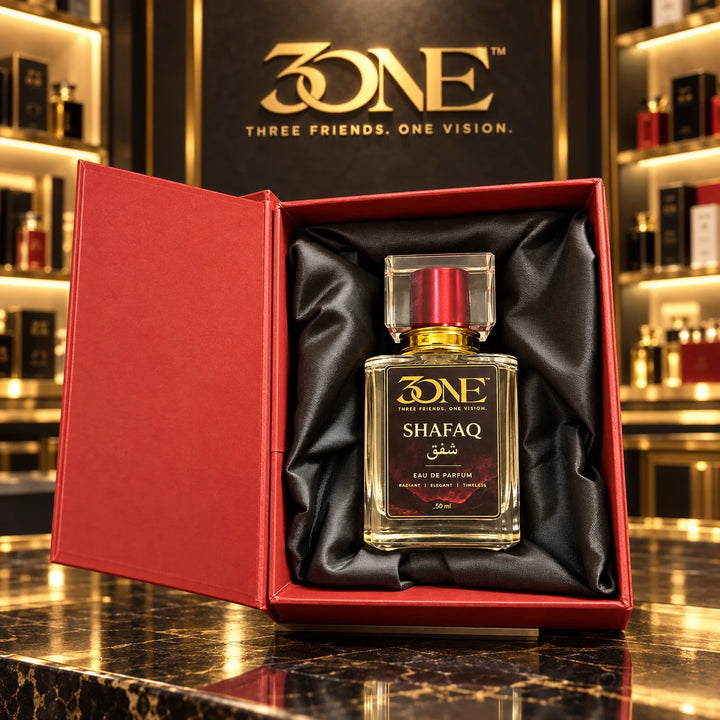
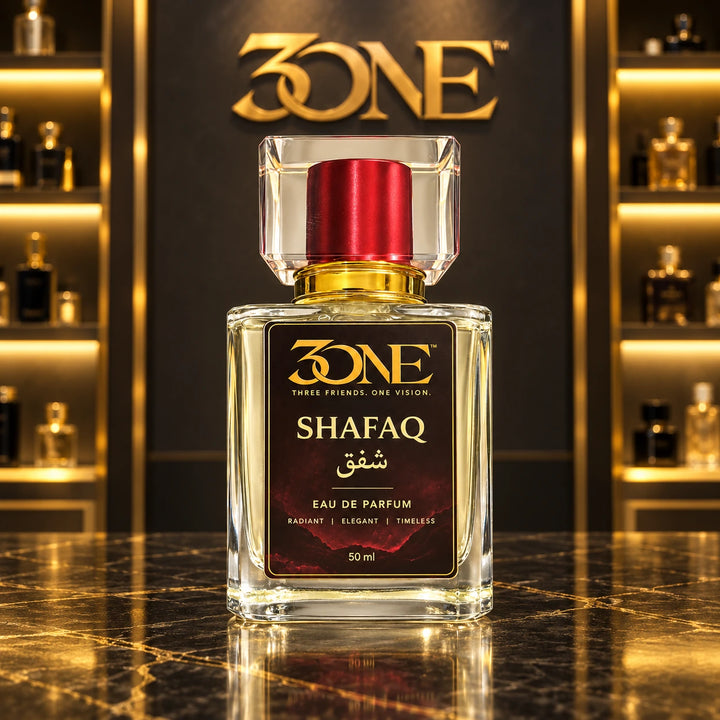
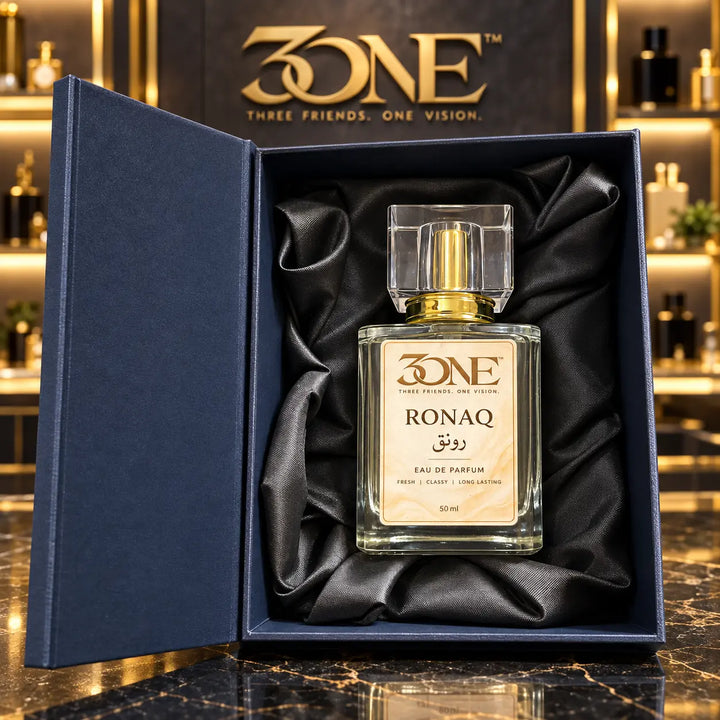
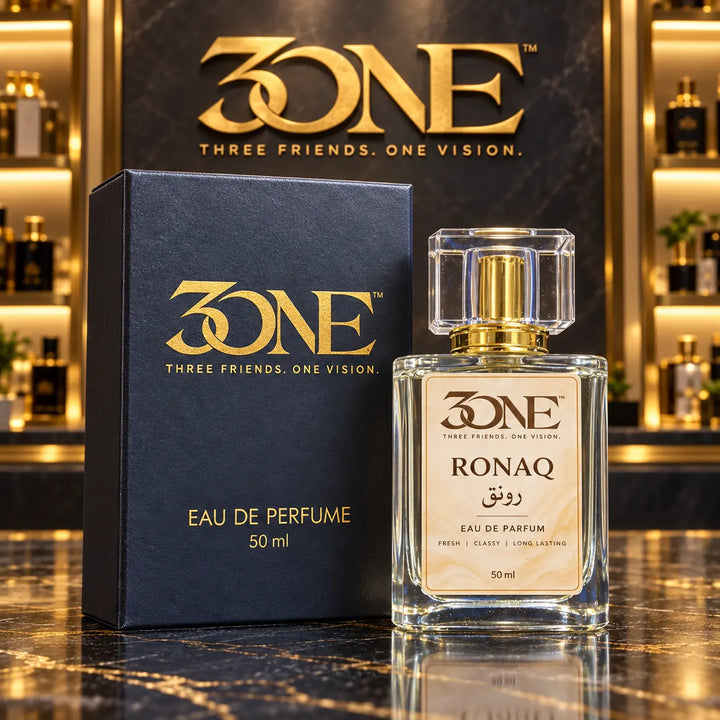
Look at Ronaq. Its top notes are lemon, Calabrian bergamot and Sicilian orange, a classic citrus opening that feels clean and awake. Compare that with Shafaq, which opens with saffron, nutmeg and lavender. Same position in the pyramid, completely different mood: one is a splash of juice, the other is warm spice with a herbal edge.
The practical lesson is simple: never buy a perfume on the top notes alone. They are the shortest part of the experience.
Heart notes: the real personality
Once the opening settles, the heart takes over. This is the part you and the people around you will notice for most of the day, so it deserves the most attention when you test a scent. Florals, fruits, richer spices and many woods live here.
- In Ronaq, the heart is Mediterranean fruits, so the citrus brightness softens into something juicier and rounder.
- In Shafaq, the heart is oud and agarwood. This is where the scent becomes deep and resinous, the quality many Pakistani noses know from attar and bakhoor. Our guide to oud explains where that smell comes from.
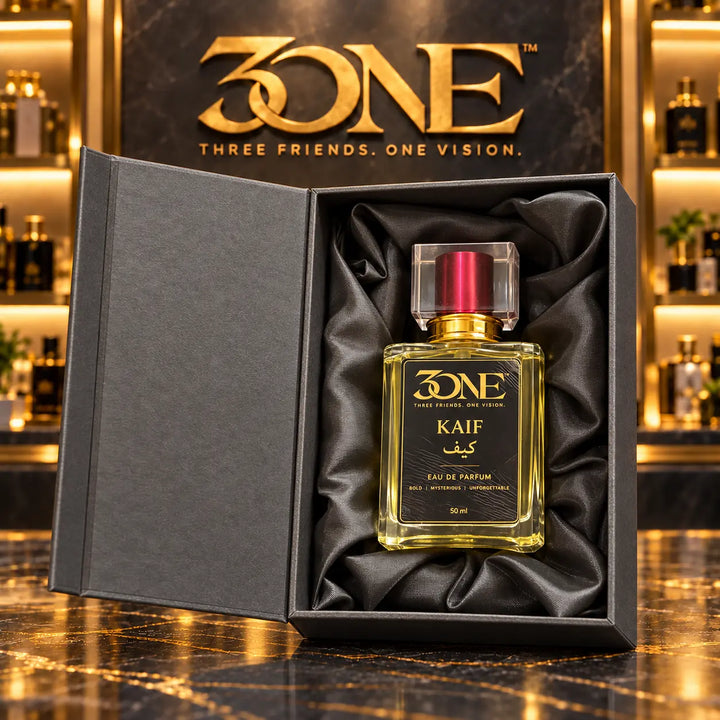
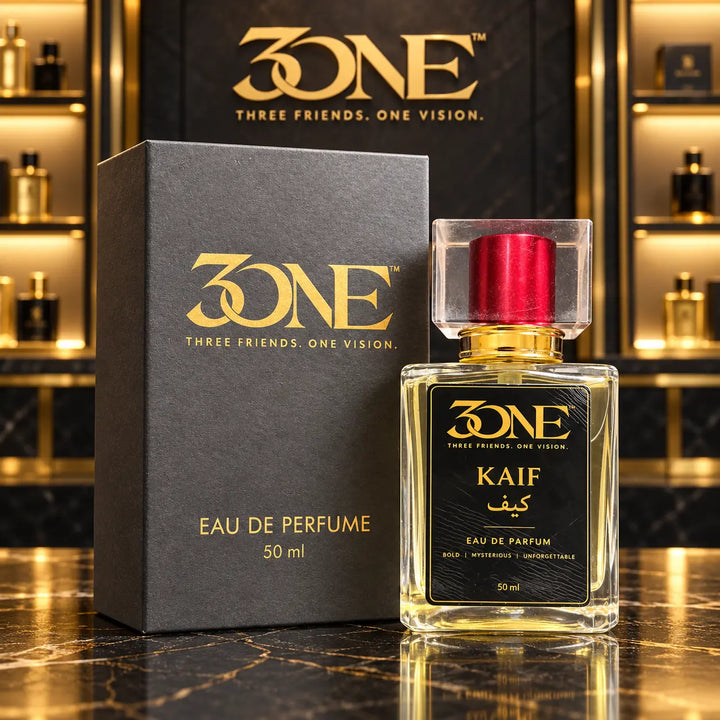
- In Kaif, the heart is an ambergris accord with ambroxan, which gives an airy, mineral, slightly salty glow rather than a heavy one.
An "accord" is worth a quick note: it means several materials blended to create the impression of one smell. An ambergris accord recreates the character of ambergris without using the raw material itself.
Base notes: what stays with you
Base notes are the slow evaporators: woods, resins, musks, amber, vanilla. They give a perfume its staying power and its "skin scent" in the late hours. They are also why the same bottle can smell different on fabric the next morning, because the base lingers longest.
- Shafaq rests on patchouli and musk, an earthy, warm finish.
- Ronaq dries down to amber, Madagascar vanilla and white musk, so a fresh perfume ends soft and slightly sweet.
- Kaif settles into dry woods, cedar and a gourmand accord, which reads as polished wood with a faint edible sweetness.
How a scent unfolds over the day
Here is a rough timeline you can expect from an eau de parfum. 3ONE fragrances are EDP strength, and around 6–8 hours on skin is typical, though skin type, heat and how you apply all play a part.
- 0–15 minutes: the top notes are loud. Alcohol is still evaporating, so the scent can feel sharp. Wait before judging.
- 15 minutes to 2 hours: the heart opens up. This is the truest picture of the fragrance.
- 2–6 hours: heart and base blend together. The scent sits closer to the skin.
- 6 hours onwards: mostly base notes, noticeable to you and anyone who comes close.
In hot, humid weather the early stages move faster, because warmth speeds up evaporation. In cooler months, especially in the north, a scent may take longer to open but can sit beautifully for hours.
How to use the pyramid when you shop
A note list is a map, not a guarantee, but it can save you from a lot of blind buys. A few ways to read it:
- Check the base first. If you dislike sweet vanilla or earthy patchouli, you will dislike the last several hours of a scent built on them, however lovely the opening.
- Look for familiar notes. If you enjoy saffron in food or in attar, a saffron opening is a good sign. Read more in our piece on saffron in perfume.
- Match the family to the season. Citrus-led tops and fruity hearts feel easier in summer; oud, spice and resin shine in winter and in the evening.
- Test on skin, not paper. A blotter shows the top notes well, but your skin is where the heart and base actually develop.
Quick answers
Why does my perfume smell different after an hour?
Because the top notes have evaporated and the heart notes have taken over. This is normal and is how most perfumes are designed to behave.
Which notes last the longest?
Base notes such as woods, musk, amber, patchouli and vanilla generally last longest. Citrus and light herbal notes fade first.
Do all perfumes follow the pyramid exactly?
Not always. Some modern scents are built to smell fairly similar from start to finish, but the top, heart and base idea is still the most useful way to understand how most fragrances develop.
Once you can read a pyramid, choosing a perfume becomes far less of a guess. If you would like to see the idea in action, compare the three note lists side by side in our fragrance collection and notice how each one opens, settles and stays. Then pick the journey that suits your day.