Few words carry as much weight in Pakistani fragrance culture as oud. You smell it drifting from bakhoor burners at weddings, in the attar shops near mosques, and on the clothes of relatives returning from the Gulf. Yet many people who love it are not quite sure what it is. So, what is oud? In short, it is a dark, fragrant resin that forms inside certain trees, and it has been prized across Asia and the Middle East for centuries. Here is a clear, practical guide to where it comes from, how it smells and how to wear it well.
What is oud? The short answer
Oud, also called agarwood, comes from trees of the Aquilaria genus, which grow across South and Southeast Asia, including north-eastern India, Bangladesh and countries such as Cambodia, Vietnam, Laos, Malaysia and Indonesia. In its healthy state, the wood of these trees is pale and has little scent.
Oud forms when the tree is wounded or infected, for example by mould or fungus. In response, the tree produces a dark, aromatic resin that gradually soaks into the heartwood. Over years, that resin-rich wood becomes the material known as agarwood. Because the process is slow and unpredictable, high-quality natural agarwood is rare and expensive.
Wood, chips and oil
Agarwood is used in a few different forms:
- Wood chips: burned slowly, on their own or in bakhoor blends, to scent homes, clothes and hair.
- Oud oil (dehn al oud): distilled from the wood, very concentrated and traditionally worn in tiny amounts as an attar.
- Perfume notes and accords: modern perfumes may use natural oud oil, but many use an oud accord, a blend of materials designed to recreate the character of agarwood. Accords help with consistency and cost, and they reduce pressure on wild trees, which are protected under international trade rules.
Why South Asia and the Gulf love oud
Agarwood has a long history in the region. It has been traded along Asian and Arabian routes for centuries, burned in homes and places of worship, and worn as a mark of hospitality and celebration. In the Gulf, perfuming guests with oud smoke is a familiar gesture of welcome.
In Pakistan, oud sits naturally alongside our own attar traditions. It is common at weddings and Eid, worn for Jummah, and gifted to elders. For many families, the smell of oud is tied to memory: a grandfather's shawl, a festive gathering, a special occasion. That emotional connection is a big part of why oud-based perfumes remain so popular here.
How does oud smell?
Oud is famously hard to describe, because it varies so much depending on the origin of the wood, the age of the oil and how it is processed. Common descriptions include:
- Woody: deep, dry and dense, like old polished wood.
- Smoky: a soft, incense-like quality.
- Leathery and animalic: some ouds have a raw, almost barnyard edge that surprises first-time wearers.
- Sweet and balsamic: warm, slightly honeyed facets, especially as the scent settles.
In modern perfumes, oud is often paired with materials that soften or brighten it: rose, saffron, spices, amber, patchouli and musk. These pairings make oud more approachable for people who find the raw oil too intense.
How to wear oud without overpowering
Oud is powerful. Worn thoughtfully, it feels elegant and warm. Overdone, it can fill a room in a way not everyone enjoys. These tips help:
- Start small. One or two sprays is often enough for an oud-based eau de parfum. You can always add more.
- Apply close to the body. The chest or the back of the neck, under clothing, gives a softer, more personal trail.
- Think about the setting. Oud suits evenings, formal events, weddings and cooler weather. In a small office or a hot car, go lighter or choose something fresher.
- Mind the season. Heat amplifies rich notes. In summer, wear oud in the evening or in air-conditioned spaces.
- Avoid mixing with other strong scents. Oud layered over a heavily scented lotion or another perfume can quickly become muddy.
Storage matters too. Rich, resinous fragrances are worth protecting from heat and sunlight; our guide on how to store perfume explains how.
Shafaq: an approachable oud from 3ONE
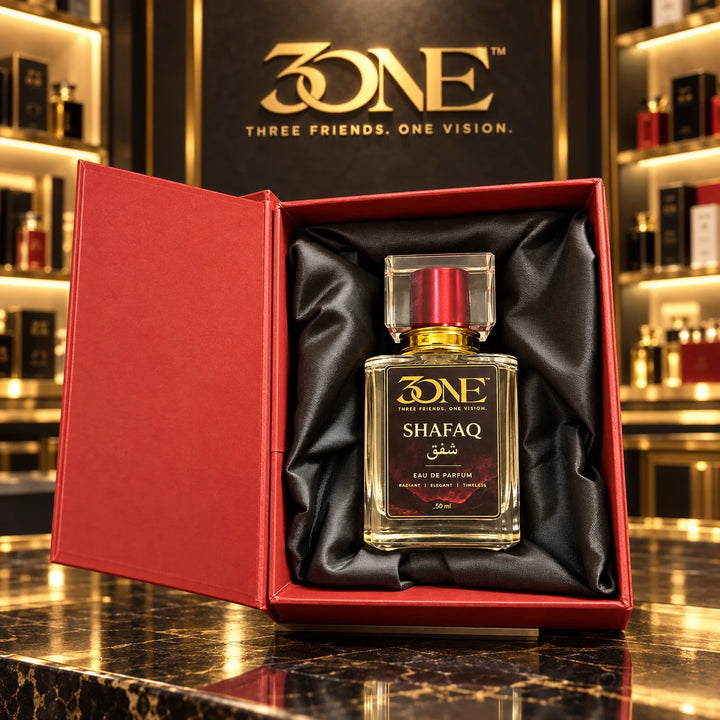
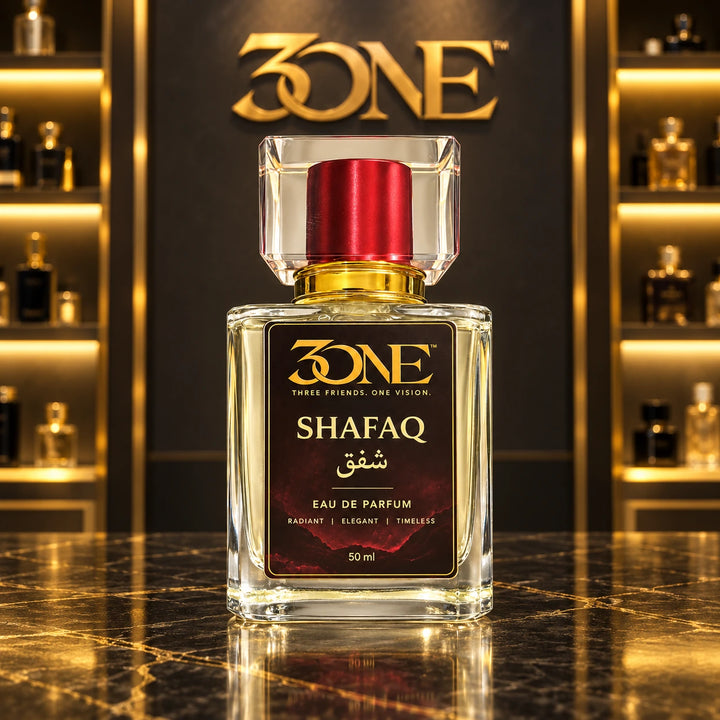
At 3ONE, Shafaq is our oud fragrance. Its name means the glow of twilight, and it is designed to feel bold and deep without being harsh. It opens with saffron, nutmeg and lavender, which add warmth and a touch of freshness. The heart is oud and agarwood, giving the scent its rich, woody core. The base of patchouli and musk keeps it smooth and long-lasting.
Shafaq is openly inspired by the profile of Oud for Greatness, with its own character as a small-batch eau de parfum. 3ONE is not affiliated with the brands mentioned. It is unisex and works especially well for evenings, formal events, weddings and the cooler months. As an eau de parfum, you can expect around 6 to 8 hours on skin and longer on fabric, depending on your skin, the weather and how you apply it.
Quick answers
Is oud the same as agarwood?
Yes. Oud is the Arabic-derived name commonly used for agarwood, the resin-rich wood of Aquilaria trees, and for the oil and fragrance made from it.
Is oud only for men?
No. In South Asia and the Middle East, oud has long been worn by both men and women. Many modern oud perfumes, including Shafaq, are unisex.
Why does some oud smell so strong?
Oud contains dense, long-lasting aromatic materials, and some types have a naturally intense, animalic character. Applying less and wearing it close to the body keeps it pleasant.
Discover oud your way
If you have always admired oud but found traditional oils too intense, a blended eau de parfum is a gentle way in. Try Shafaq for a warm, woody take, or explore the full 3ONE collection to compare it with our fresher scents. Delivery is free across Pakistan, with cash on delivery nationwide.