The same perfume can feel perfect at a winter dinner and slightly too much in a packed office lift at nine in the morning. That is the heart of the day vs night perfume question. There are no strict rules, but there are good reasons why some scents feel natural in daylight and others come alive after sunset. This guide explains those reasons and shows how to match a fragrance to your office, university, dinners and weddings.
What makes a perfume a "day" scent?
Daytime fragrances tend to share a few traits. They are not weaker in quality, just lighter in feel.
- Fresh, bright notes: citrus, light fruits, clean musks and soft florals.
- Moderate projection: noticeable to someone near you, not across the room.
- Comfort in heat: in Pakistani summers, warm temperatures make every scent louder, so lighter compositions stay pleasant.
- Close quarters: offices, classrooms, buses and shared cars mean other people are breathing your perfume too.
What makes a perfume a "night" scent?
Evening fragrances are usually deeper and warmer, with more weight in the heart and base.
- Rich notes: oud, amber, spices such as saffron and nutmeg, resins, patchouli and heavier musks.
- More presence: they are meant to be noticed at a dinner table or across a wedding hall.
- Cooler air: evenings, and winter generally, let dense scents unfold slowly without becoming overwhelming.
- Occasion: formal clothing and festive settings suit a fragrance with a sense of ceremony.
If you want to understand why some notes feel "heavy" and others "light", our guide to top, heart and base notes covers how each layer behaves on skin.
Day vs night perfume: the key differences at a glance
- Notes: day leans citrus, fruit and clean musk; night leans oud, spice, amber and woods.
- Amount: fewer sprays in the day; a little more is acceptable at an evening event.
- Placement: for daytime, chest and wrists under clothing keep it close; for night, neck and the back of the collar help it carry.
- Season: a "night" scent can work in daytime in December in Islamabad, while a "day" scent can be ideal for a humid July evening in Karachi.
Mapping the 3ONE scents
All three 3ONE fragrances are unisex eau de parfums. Here is how they fit across the day.
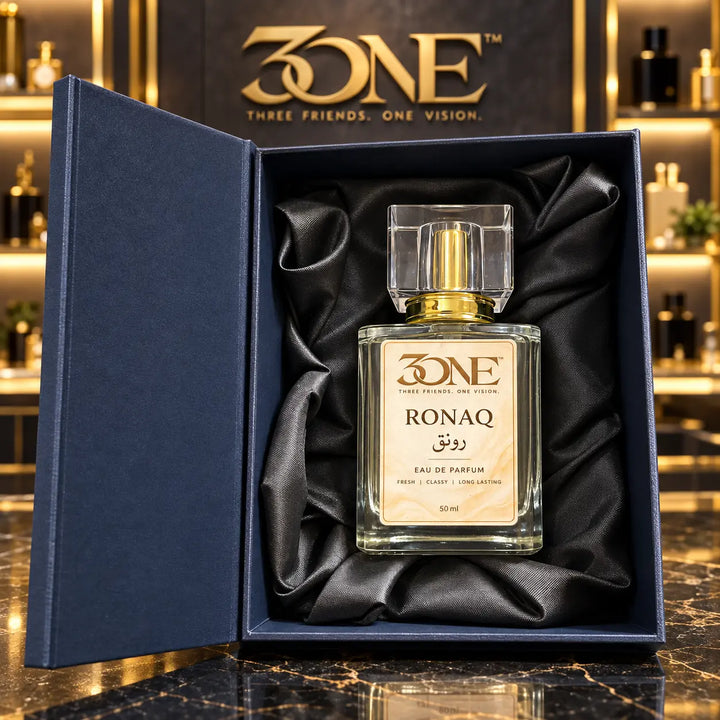
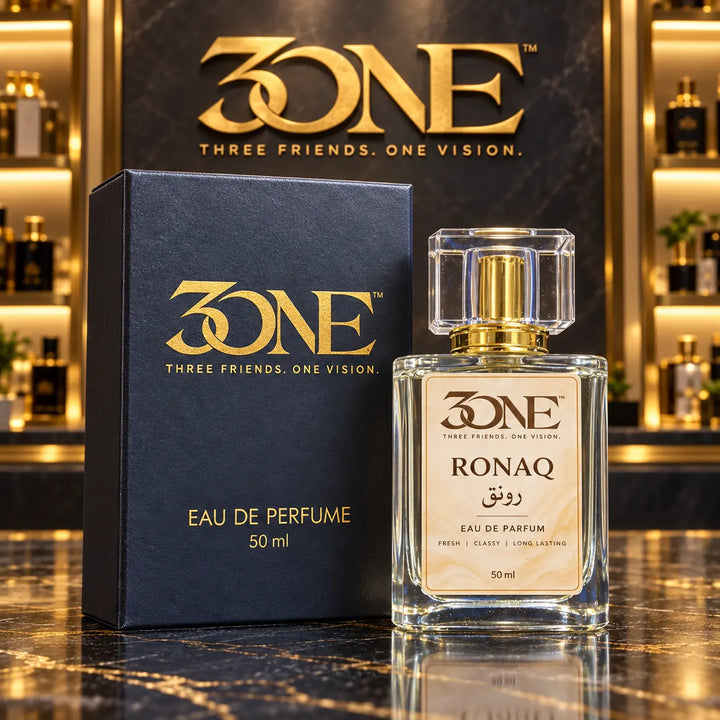
Ronaq: your daytime default
Ronaq opens with lemon, Calabrian bergamot and Sicilian orange, moves into Mediterranean fruits, and settles on amber, Madagascar vanilla and white musk. It is bright and easy, which makes it a natural choice for the office, university, errands and summer days. The soft amber-vanilla base means it does not feel thin by the afternoon.
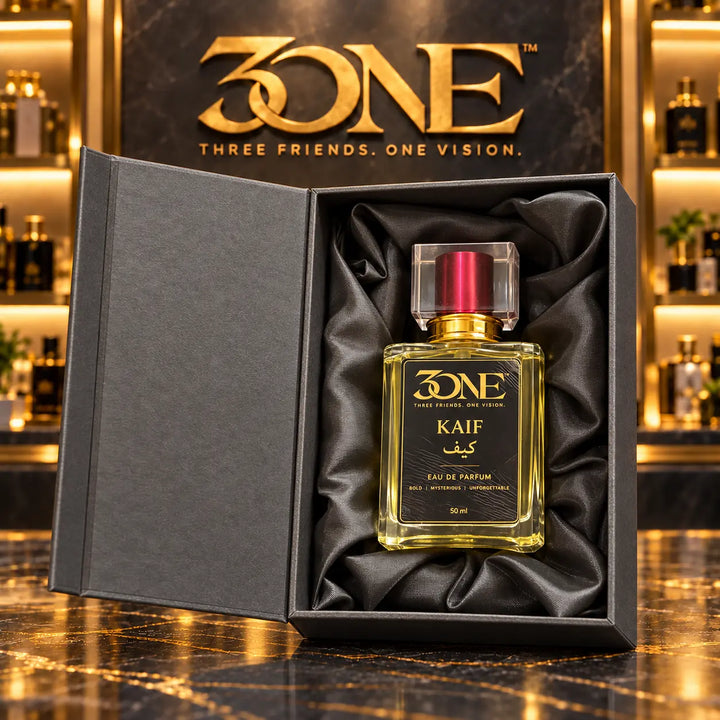
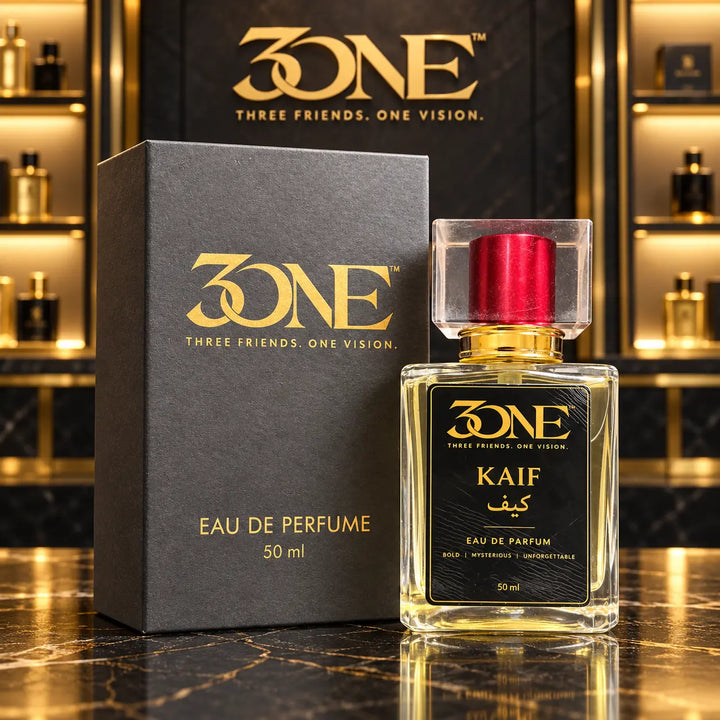
Kaif: the day-to-night bridge
Kaif is woody, amber and floral, with saffron and jasmine up top, an ambergris accord and ambroxan at the heart, and dry woods, cedar and a gourmand accord at the base. It has a luminous, airy quality rather than heavy darkness, so two sprays work at work and a third before dinner carries it into the evening. If you only want one bottle for most situations, Kaif is the flexible option.
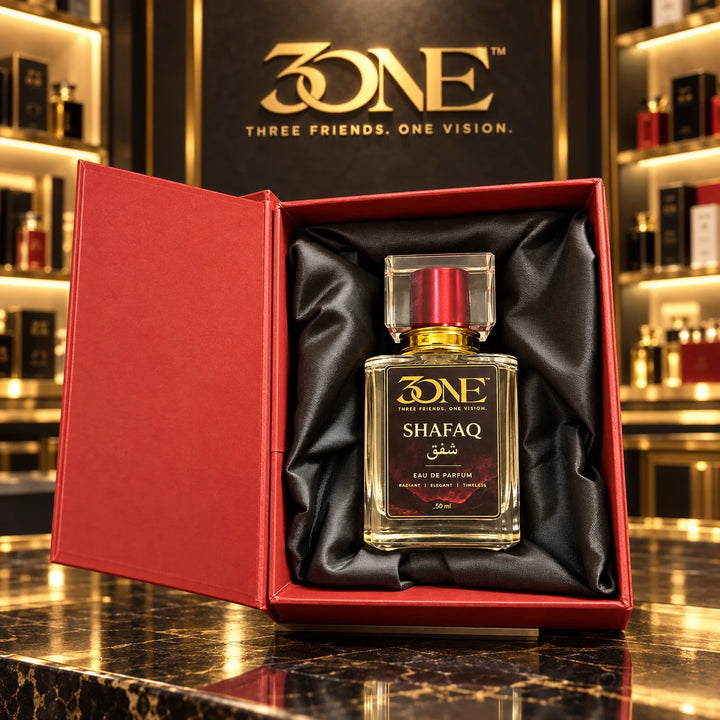
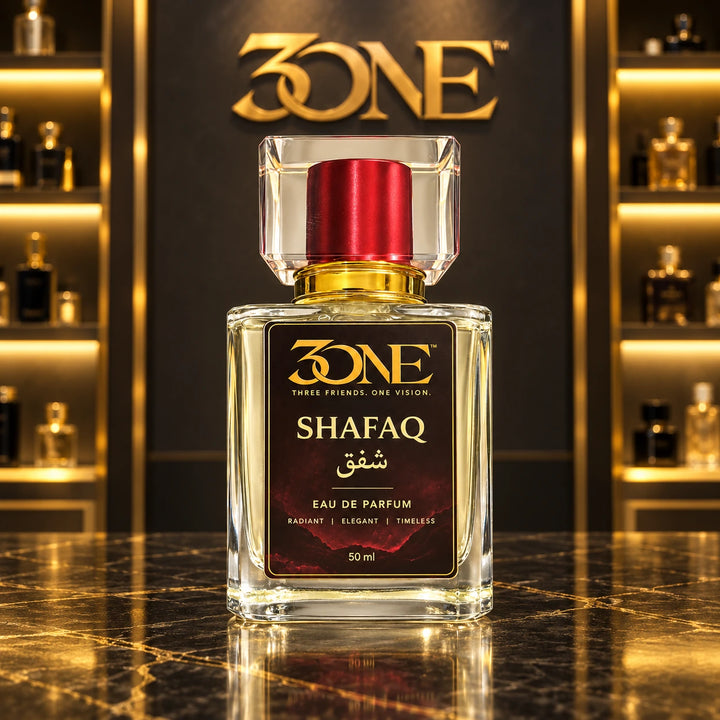
Shafaq: built for evenings
Shafaq is woody, amber and spicy: saffron, nutmeg and lavender, then oud and agarwood, then patchouli and musk. It is bold and deep, and it shines at formal events, winter weddings and late dinners. In summer daytime heat it can feel intense, so save it for cooler hours.
Choosing for specific settings
Office and meetings
Go light and close. Ronaq, or one or two sprays of Kaif, keeps you fresh without disturbing a shared room. Apply before you leave home rather than at your desk.
University and classes
Long days and warm classrooms favour fresh scents. Ronaq is the easy pick; Kaif suits days that end with plans.
Dinners and evenings out
This is where you can choose more freely. Kaif feels polished and modern; Shafaq feels richer and more traditional, especially in winter.
Weddings and formal functions
Mehndi and dholki are festive but often relaxed, which suits Kaif. Baraat and walima evenings, with formal sherwanis, suits and heavy fabrics, are ideal territory for Shafaq. For summer weddings outdoors, consider Kaif even at night.
Tips for switching from day to night
- Start light in the morning so you have room to add later.
- If you change outfits, spray on fresh clothing rather than layering over the morning's scent.
- Use fewer sprays of a heavy scent rather than more of a light one if you want presence without crowding.
- Remember that EDP strength generally means around 6–8 hours on skin, varying with skin and weather, so a morning application may be fading by an evening event.
Quick answers
Can I wear a night perfume during the day?
Yes. Just use fewer sprays, apply to skin under clothing, and consider the weather. In cool months a rich scent can be lovely by day.
Is one perfume enough for day and night?
It can be, if you choose a versatile scent and adjust how much you apply. Kaif is designed to move between the two.
Why does my perfume seem stronger at night?
Often it is the setting: closer company, still indoor air and fewer competing smells make a fragrance easier to notice.
The right choice depends less on the clock and more on where you are, who is around you and how warm it is. If you would like to build a small wardrobe that covers both, take a look at the full 3ONE fragrance collection and start with the scent that fits most of your days.