In Pakistani homes, saffron, or zafran, means celebration. It colours wedding biryani, perfumes a bowl of kheer and turns an ordinary cup of kahwa into something special. So it makes sense that a saffron perfume feels instantly familiar to many of us. In fragrance, saffron is prized for its warm, slightly leathery glow, and it has become one of the most recognisable notes in modern perfumery. Here is what saffron brings to a scent, where it comes from and how it actually reads on skin.
What is saffron?
Saffron comes from the dried stigmas of the saffron crocus, Crocus sativus. Each flower produces only three thin red threads, which are picked by hand during a short autumn flowering season. It takes a very large number of flowers to produce even a small amount of dried saffron, which is why it is often described as one of the most expensive spices in the world.
Its distinctive aroma comes largely from a compound called safranal, which develops as the threads dry. That same aroma is what perfumers aim to capture or recreate when they use saffron as a note.
Saffron's history in our region
Saffron has been cultivated for thousands of years across Persia, the Mediterranean and South Asia. Kashmir has long been famous for its saffron fields, and Iran remains one of the best-known producers today. Through trade routes and royal kitchens, saffron became woven into the food, medicine traditions and rituals of the subcontinent.
Under the Mughals, saffron appeared in rich dishes, sweets and scented preparations, and it remained a symbol of luxury and hospitality. Even now, many families keep a small box of zafran for weddings, Eid and special guests. When we smell saffron in a perfume, we are often reminded of these moments, which is a big part of its emotional pull in Pakistan, the Gulf and beyond.
How saffron works in a saffron perfume
Natural saffron is extremely costly and its aroma is delicate, so most modern perfumes build the note using a combination of natural extracts and aroma molecules designed to echo saffron's character. This is common practice in perfumery and allows the note to be consistent and wearable.
How saffron smells
As a fragrance note, saffron is usually described as:
- Warm and spicy: but softer and rounder than pepper or clove.
- Leathery: a smooth, suede-like quality that adds sophistication.
- Honeyed and hay-like: a dry sweetness, like sun-warmed grass.
- Slightly metallic: a bright, almost mineral glint that gives saffron its glowing effect.
Where saffron sits in the pyramid
Saffron often appears as a top note, giving a scent an immediate warm, golden opening. Because it has some depth, its effect can carry into the heart, blending with florals, woods and resins. It pairs especially well with rose, jasmine, oud, amber and woody notes.
How saffron reads on skin
On skin, saffron tends to show itself most in the first part of the wear. When you first spray a saffron perfume, you may notice a warm, slightly spicy shimmer. Over the following hour or so, it softens and merges with whatever sits beneath it. In a woody fragrance, saffron feels richer and more leathery. In an airy, ambery scent, it feels brighter and more radiant.
Skin chemistry and climate change the experience too. In heat, saffron's spicy side becomes more noticeable and the scent projects further, so a lighter application is wise in summer. In cooler weather, it feels cosier and closer to the skin.
Two 3ONE fragrances with saffron
Saffron opens both of our woody amber scents, but it plays a very different role in each one.
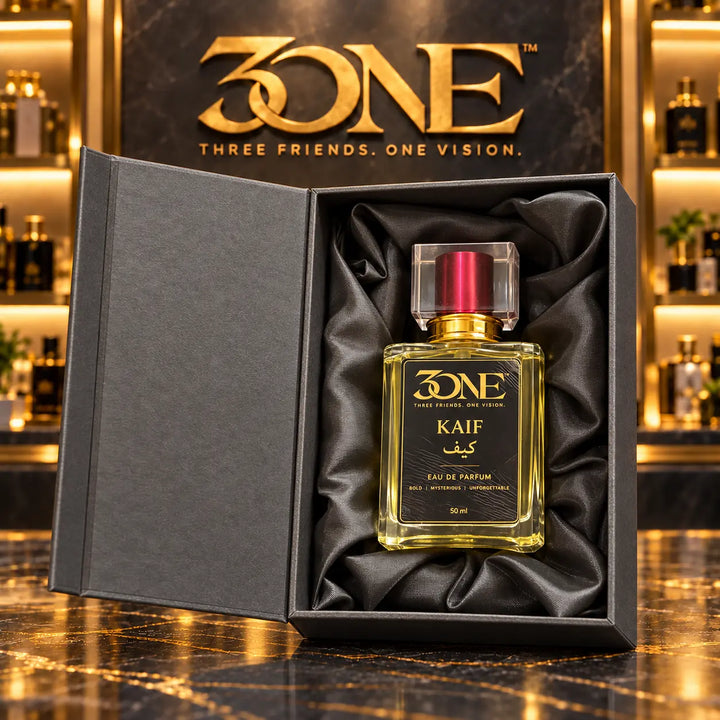
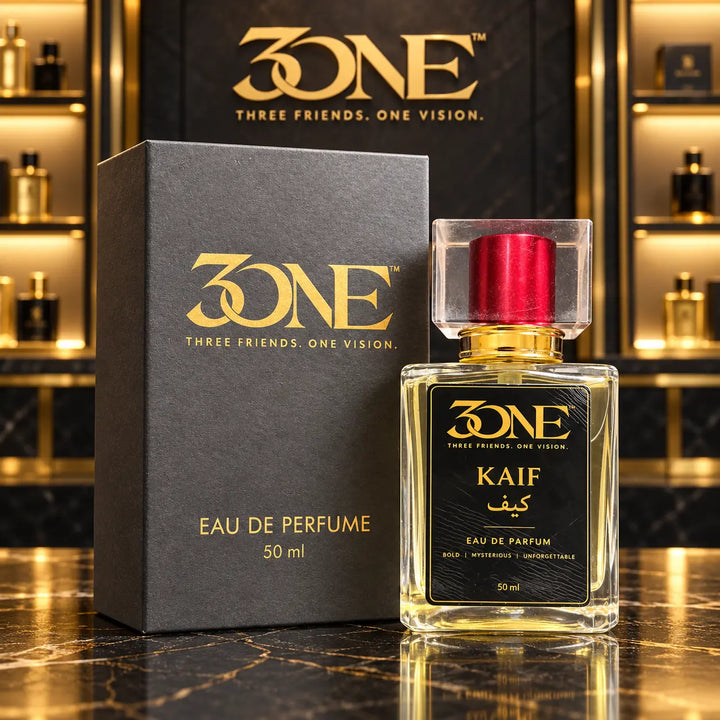
Kaif: saffron made luminous
Kaif opens with saffron and jasmine, a bright and gently floral pairing. The heart moves into an ambergris accord and ambroxan, which give an airy, mineral glow, before settling into dry woods, cedar and a gourmand accord. Here, saffron reads as radiant rather than heavy, which makes Kaif a natural day-to-night scent. It is openly inspired by the profile of Baccarat Rouge 540, with its own small-batch character. 3ONE is not affiliated with the brands mentioned.
Shafaq: saffron with depth
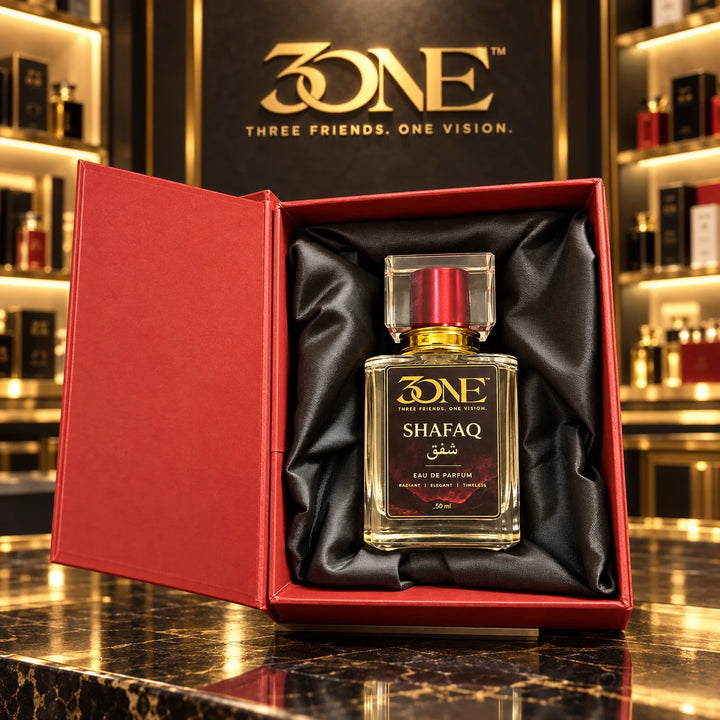
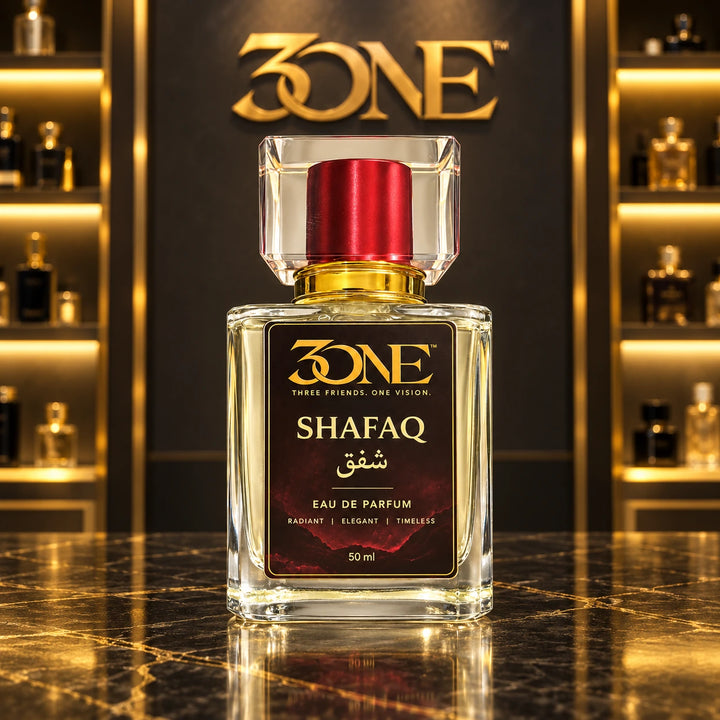
Shafaq pairs saffron with nutmeg and lavender in the opening, then moves into a heart of oud and agarwood and a base of patchouli and musk. In this setting, saffron feels warmer and more leathery, adding spice to the dark, woody core. It suits evenings, formal events and cooler weather. To learn more about the heart of this scent, read our guide on what oud is and how to wear it.
Tips for wearing a saffron fragrance
- Give it time. Judge a saffron scent after 20 to 30 minutes, once the opening settles.
- Go lighter in summer. Heat amplifies spice, so a couple of sprays is often enough.
- Choose by mood. Pick a brighter, airy saffron scent for daytime and a woody one for evenings.
- Try clothing. Saffron notes can last nicely on a shawl or scarf, but test on a hidden area first.
Quick answers
Does saffron perfume contain real saffron?
Sometimes, but many perfumes recreate the note with a blend of natural and synthetic materials, because real saffron is very costly and delicate. This is standard in modern perfumery.
Is saffron perfume suitable for daytime?
Yes, especially when saffron is paired with light, airy notes, as in Kaif. Richer woody versions are often better suited to evenings.
Is saffron a masculine or feminine note?
Neither. Saffron is used across all styles of fragrance, and both 3ONE saffron scents are unisex.
Find your golden note
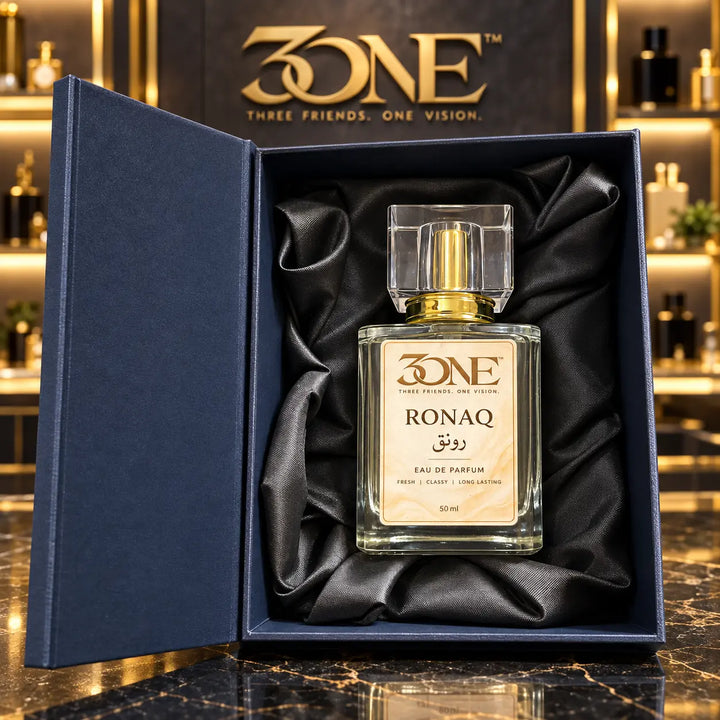
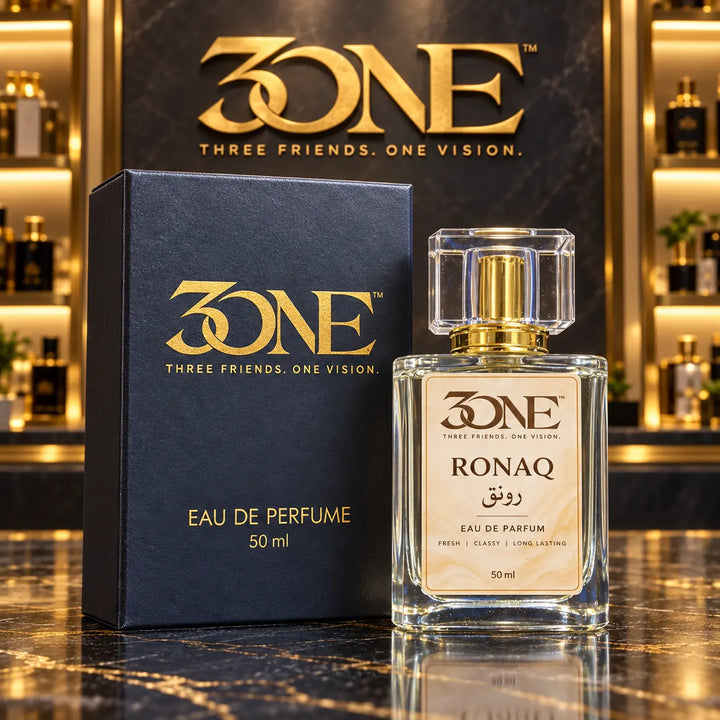
Whether you prefer saffron bright and glowing or warm and woody, there is a way to wear it that suits you. Explore Kaif for a luminous take, or compare it with Shafaq and Ronaq in our full fragrance collection. Delivery is free across Pakistan, with cash on delivery nationwide.